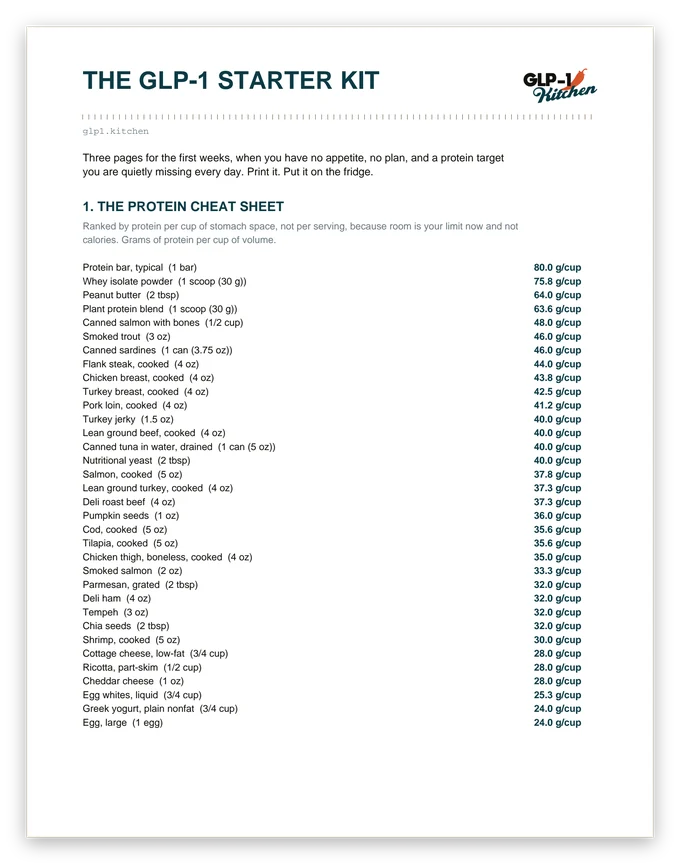
The GLP-1 Pill Companion
The complete first-90-days guide and high-protein cookbook. 90 small-portion recipes, a 30-day plan, and a 90-day tracker you write in.
Get it on AmazonFour bites in and you are done. That is a cooking problem before it is anything else.
Free. No card. One click to leave.

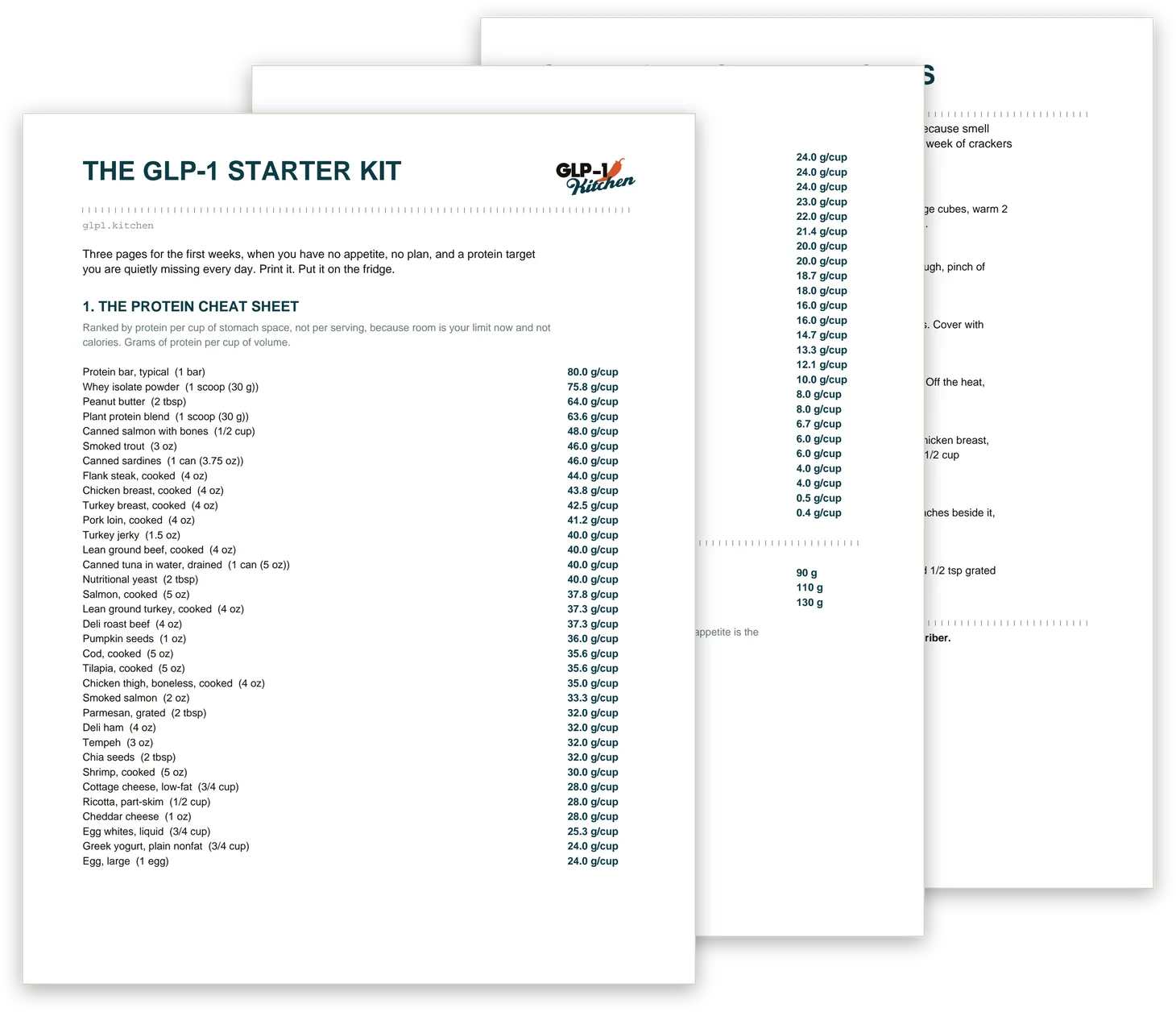
GLP-1 Kitchen is a free food site for people on GLP-1 medications. It ranks 59 common foods by grams of protein per cup, because stomach room is the real limit. It is written by an independent researcher, not a medical professional, and it has no dosing advice.
Updated October 2026
Why this site existsEvery one of those is a food problem wearing a medical costume. That is the entire remit of this site.
All three get called a protein. All three take the same room in a stomach that has not got much left.
Every protein chart on the internet ranks food by grams per serving. That is the right number when calories are your limit. It is the wrong one when room is. This chart ranks by protein per cup of stomach space instead, which is what actually decides what you should be eating.
Fifty-nine foods. Sourced. Dated.
Open the chartIt is the sheet you tape inside a cupboard door in week one and still use in week nine. Paper, because week one is not the week you learn a new app.
Not a sample of a paid thing.
Not a teaser chapter that stops at the useful part.
Not an account, a login, or a trial that bills you later.
Not medical advice, and it says so on the page itself.
Fifty-nine foods ranked by grams of protein per cup of volume, so you can pick by the only budget that still matters.
Cold, low-smell, five ingredients or fewer, and built for the days when standing over a hot pan is the whole obstacle.
Protein hit or missed each day, and one weekly check-in. Printable, with no app and no account.
Free. No card. One click to leave.
Ninety small-portion recipes, every one flagged for the day you are actually having: queasy-safe, constipation-fighting, or step-up week. Plus the 30-day plan, the dose-by-dose walkthrough of the first 90 days, and the chapter on when the answer is to call your doctor rather than to cook something.
Out now in paperback and on Kindle. One hundred and ninety-six pages, and the tracker is worth writing in rather than reading.
Get it on Amazon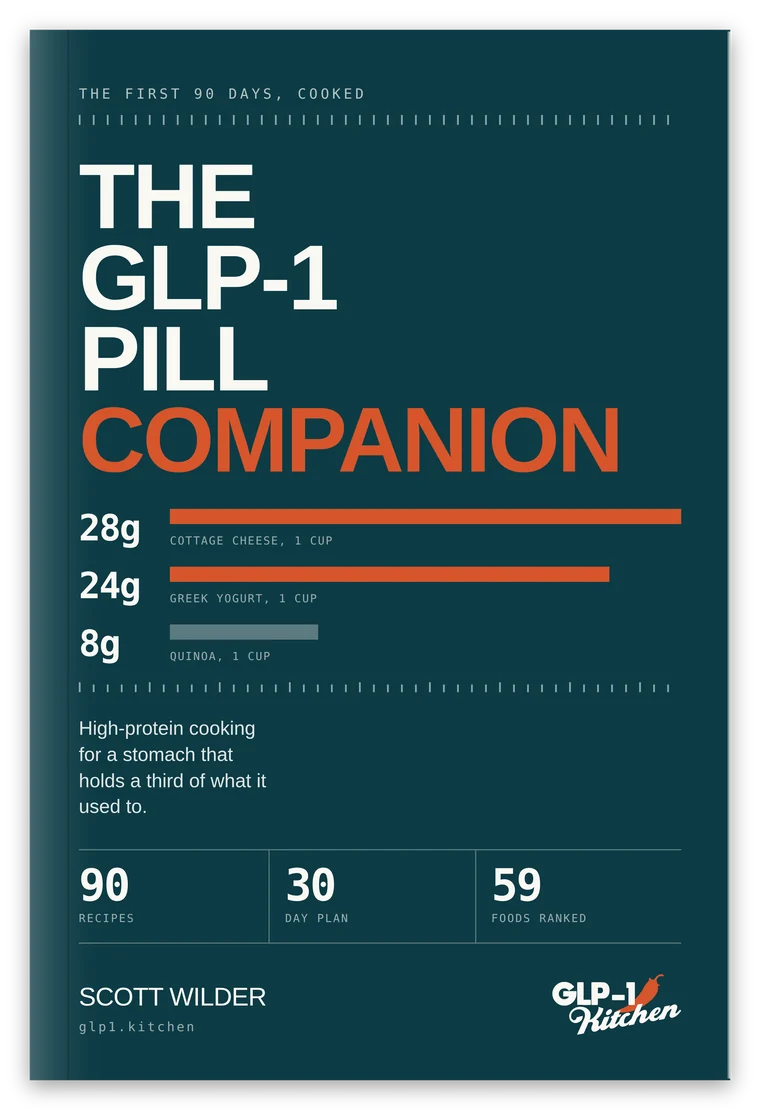
The complete first-90-days guide and high-protein cookbook. 90 small-portion recipes, a 30-day plan, and a 90-day tracker you write in.
Get it on AmazonBoth paid guides together: the 90-Day Companion System ($27) and the Queasy-Day Emergency Deck ($17). $44 separately, $37 together. The book is sold separately on Amazon.
Get the bundleDays 31 to 90, already planned. Nine weeks of meal plans built from the recipes in the book, every day at 95 to 130 g of protein, a real shopping list for each week, two step-up weeks built queasy-safe, the swap charts, and four tracker pages you write on.
Get it on GumroadFor the week after a dose increase. Every queasy-safe recipe in the book as a cut-out card, two to a sheet, plus the cannot-stomach-it-today ladder, six symptom cards, and the red flags on a page of their own.
Get it on GumroadThe free Starter Kit is available now and is not a sample of anything. It is the whole thing. The paid guides say exactly what is in them, and the bundle is cheaper than buying the two separately.
GLP-1 Kitchen is a free food site for people on GLP-1 medications. It ranks 59 common foods by grams of protein per cup, because stomach room is the real limit. It is written by an independent researcher, not a medical professional.
By grams of protein per cup of volume, using typical values from standard food composition data such as USDA FoodData Central. Brand and fat level change the numbers, so check your label. The full chart is at /protein-density/.
The articles, the protein density chart and the Starter Kit are free. The site also sells a book and two paid guides, and those are labeled as products.
Yes. Three printable tools, no card, no trial, no wall halfway through. You get one email when something useful publishes, and one click removes you for good.
Yes. The delivery method changes the schedule and part of the side-effect profile. It does not change what protein does in a stomach that empties slowly. The recipes, the targets, and the symptom fixes read the same either way. Where the pill genuinely differs, articles say so in the text.
No, and it never pretends otherwise. There is no dosing advice anywhere on this site. Titration appears only as what the prescribing information describes, and your prescriber sets your schedule. This is a food and habits site written by Scott Wilder, an independent researcher, not a clinician.
Because a per-serving ranking assumes calories are your limit. On a GLP-1, room is your limit. Cottage cheese carries 28 g per cup and cooked quinoa carries 8 g, and they take identical space. Ranking by volume is the thing that changes the answer.
It goes to the mailing list and nowhere else. It is never sold, rented, or handed to a pharmaceutical company, and this site is not affiliated with one. The privacy page says the same thing in more words.
Every factual claim here traces to a clinical trial, an FDA label, or a published guideline, and says which. Claims that are contested get both sides. Claims that are thin get labeled thin. Community reports get called community reports.
Written by Scott Wilder. Independent researcher who reads the trial data and the prescribing information so you do not have to. Not a medical professional. These articles are not medically reviewed, and the site says so rather than implying otherwise. Your prescriber sets your medication schedule. This site sets your table.
Plain nonfat Greek yogurt has about 24 g of protein per cup, about double regular yogurt. Per-cup numbers, small-portion ideas and a short FAQ.
Foods that pack the most protein into the least room, with per-cup numbers, made-up example meals and a protein-first eating order for small appetites.
A cottage cheese scramble with about 20 g of protein in 5 minutes. Soft, mild and small enough to finish on a low-appetite morning. Recipe and math.
Cook once, freeze in four-bite portions, write the protein on the bag, and chill within 2 hours. A 7-step routine and label for small appetites.
Are eggs high in sulfur? Yes, compared with most foods. Egg swaps with protein per cup, so a sulfur burp spell does not cost you your protein.
What to eat when you have sulfur burps: chicken, turkey, white fish and tofu, with protein per cup and small-portion ideas. Food swaps, no dosing advice.
One email when something useful publishes. Unsubscribe in one click. No spam, ever.