GLP-1 Snack Ideas: High Protein, Low Sugar, Small Portions
Pick a GLP-1 snack with 10 g or more protein and 8 g or less added sugar. Get the snack list with grams, a label check and a per-snack sugar formula.
By Scott WilderPublished October 29, 2026
Independent researcher. Not a medical professional. This article is about food, not treatment. See
how these articles get written.
A good GLP-1 snack has 10 g or more of protein, 8 g or less of added sugar, and fits in a portion you can finish without forcing it. By the end of this page you will have a snack list with grams, a ten-second label check, and a formula that turns your own sugar limit into a per-snack number.
The short list: five snacks that clear the bar
Cleaneatz Kitchen says a snack should carry at least 10 g of protein, and 20 g is better. Healthecooks puts the target at 15 to 20 g in a small, easy-to-digest portion. These five land in that range.
Snack
Protein
Texture
Pick it when
Plain nonfat Greek yogurt, single serve
about 16 g
Cold, smooth
You feel queasy or want zero prep
Cottage cheese, 1/2 cup
about 14 g
Cold, soft
You want something that keeps in the fridge for days
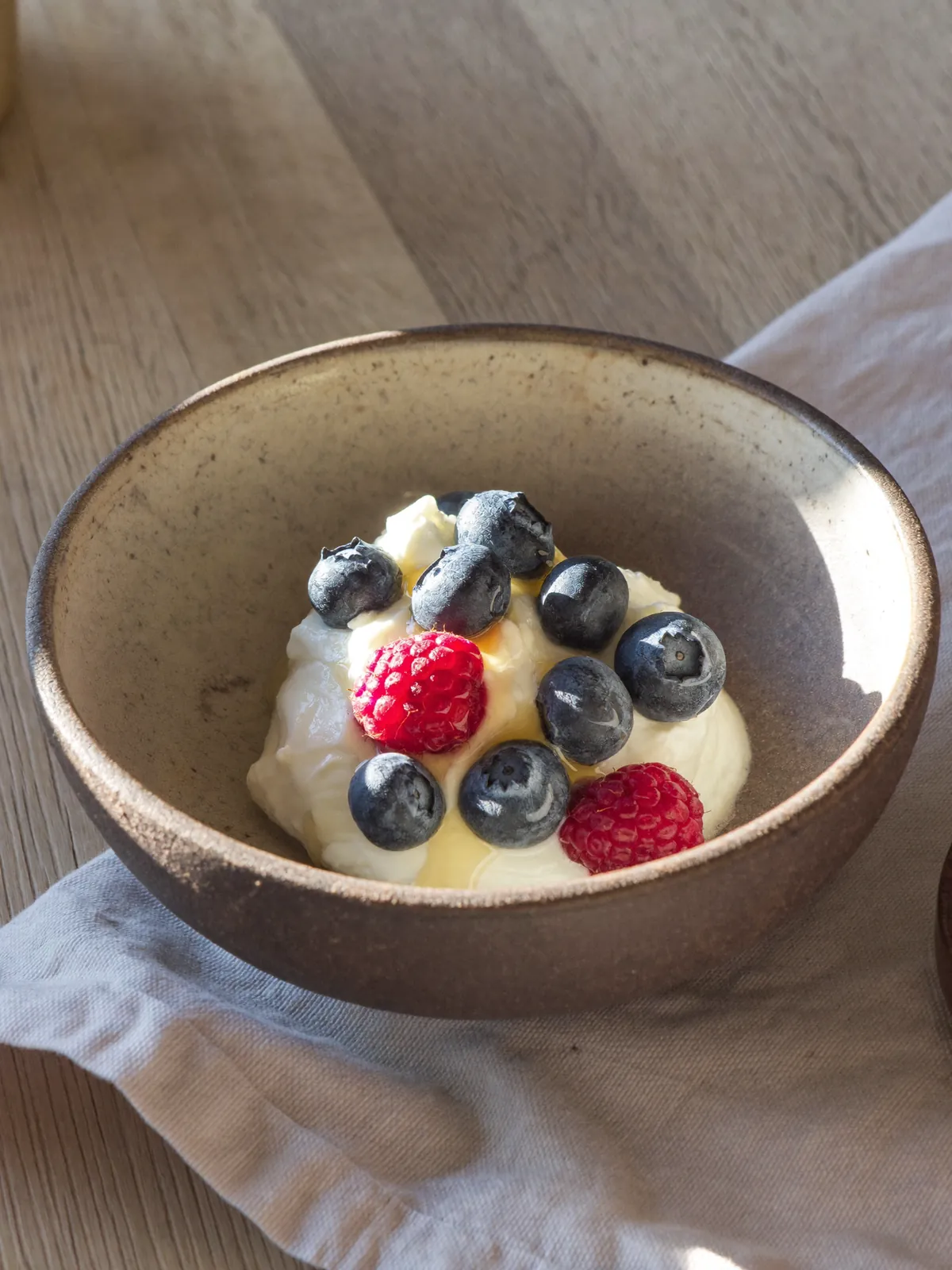
When you want something fuller than a yogurt cup, build the parfait Healthecooks describes: 3/4 cup plain Greek yogurt, 1/2 cup mixed berries and 1 tablespoon of chia seeds or crushed almonds. Stop there. Granola and honey are how a 16 g snack turns into a sugar problem.
Protein: 10 g or more per portion. Aim for 15 g or more if it is a bar.
Added sugar: 8 g or less on the “Added Sugars” line.
Portion: small enough that you can finish it without forcing it down.
Three yeses and it goes in the cart. One no and you pick another.
A low-sugar snack guide pairs the 8 g sugar line with 15 g or more of protein and under 250 calories for bars. Healthecooks allows up to about 10 g of sugar and keeps fat to 5 to 10 g a snack. The next section shows how to get the 8 g from your own day instead of taking anyone’s number on faith.
Example: say a flavored yogurt cup reads 12 g protein and 13 g added sugar. Protein passes. Added sugar fails, because 13 is above 8. Swap it for the plain version and add a spoonful of berries, and you are back inside the line.
Count only Added Sugars, not Total Sugars
Plain yogurt and plain cottage cheese carry natural milk sugar, and the American Heart Association guidance does not count the sugar naturally in fruit, vegetables or dairy. It covers sugars added during processing, cooking or at the table.
On the Nutrition Facts panel, find “Added Sugars” under the total. If you read the total instead, plain dairy looks worse than it is.
The formula: daily ceiling, minus the added sugar you already eat at meals, divided by the number of snacks.
Example: say your ceiling is 25 g, breakfast and dinner together carry 9 g of added sugar, and you plan two snacks. Twenty-five minus nine is 16. Sixteen divided by two is 8 g per snack.
Two snacks at the cap use 16 g and leave room for everything else. With three snacks, aim lower. A quick conversion: 4 g of sugar is about one teaspoon, so an 8 g snack is about two teaspoons.
Portion it ahead so the choice is already made
When your appetite is low, deciding is the hard part. On a day you feel fine, spoon cottage cheese into three or four small containers, set out single-serve yogurts at the front of the shelf, and keep one shake in the door. Then a snack takes ten seconds, and you are not standing in front of the fridge negotiating with a stomach that says no to everything.
Eat it slowly, in two or three rounds across an hour if you have to. A snack you finish over an hour still counts toward your protein target, and it is easier on you than forcing the whole cup down at once. For more on cooking in bulk for small appetites, see batch cooking single portions.
Skip the snack when a meal is close
You do not owe your day a snack. Use this table.
If this is true
Do this
Your last meal left you under your protein target
Snack on 10 g or more, and 20 g is better
You are not hungry and the last meal was recent
Skip it, or sip a ready-to-drink shake or protein pudding, which take little room
You feel queasy
Reach for something cold and plain, like yogurt or cottage cheese, and leave rich or fried snacks for another day
A meal is coming up soon
Wait. A snack right before a meal eats the room the meal needed
Buying a bar on the front of the package. “Protein” on the front says nothing about the sugar on the back. Run the three checks first.
Stocking a box before trying one. Some GLP-1 users report that sugar alcohols and gums upset their stomach. That is a community report, not a trial finding, so buy one, wait a day, then decide.
Loading the parfait. Granola, honey and a big handful of fruit push up sugar and volume and crowd out the protein that was the point. Keep to 1/2 cup of berries and 1 tablespoon of chia.
Pick your first snack in the next ten minutes
Open the fridge and the pantry and run the three checks on what is already there. Write down one anchor snack at 15 g or more and two backups at 10 g, then put the anchor where you can reach it without cooking.
If you want the protein cheat sheet and the 30-day tracker to go with it, the free kit is below. It is complete on its own, not a sample, and it needs no card.
At least 10 g, and 15 to 20 g is better if you can manage the portion. Pick something small, soft or cold, and easy to digest.
How much added sugar is too much in a GLP-1 snack?
Aim for 8 g or less of added sugar per snack. Work it out from your own day: your daily ceiling, minus the added sugar at meals, divided by the number of snacks.
Does the sugar in plain yogurt count?
Not as added sugar. Plain yogurt and cottage cheese carry natural milk sugar, so read the Added Sugars line, not the total.
Should I snack if I am not hungry?
Only if you are under your protein target or the gap to the next meal is long. Otherwise skip it, or sip a shake that takes little room.
Which snack is best when I feel queasy?
Something cold and plain, like plain Greek yogurt or cottage cheese. Leave rich or fried snacks for another day.
Before you go
Severe abdominal pain that goes through to your back, vomiting you
cannot stop, or an inability to keep fluids down are not food problems.
Call your prescriber.
Everything on this page is food, habits, and lifestyle information. Your
prescriber sets your medication schedule, including dose and timing.
Free
The GLP-1 Starter Kit
The protein cheat sheet, seven queasy-day recipes, and the 30-day habit
tracker. Printable, and yours for an email address.
One email when something useful publishes. Unsubscribe in one click. No spam, ever.