How to Eat on a GLP-1: Protein First, Small Portions
Protein first, small portions, eat slowly, stop at the first full signal. A plain guide to eating on a GLP-1, with protein per cup numbers.
By Scott WilderPublished October 19, 2026Updated October 19, 2026
Independent researcher. Not a medical professional. This article is about food, not treatment. See
how these articles get written.
Eat protein first, in small portions, slowly, and stop at the first full signal. On rough days go cold and bland, and keep fluids between meals instead of with the food.
This is food info, not medical advice. Talk to your prescriber about nausea that doesn’t ease.
Stomach room is the limit now, so every choice below is about getting the most out of a small space. The numbers come from our protein per cup chart, which ranks 59 foods.
Protein first
Put the protein food on the plate first, and eat it first. If you fill up after four bites, you want those four bites to be chicken or cottage cheese, not the garnish.
This is the whole trick. A small stomach fills fast, and protein is what gets crowded out when it does. A big salad is the classic way to lose this game.
A plate is a big, empty idea. A cup is a physical fact. Here is what a cup of stomach room buys, straight from the chart:
Chicken breast, cooked: 43.8 g of protein per cup (4 oz is 35 g)
Canned tuna in water, drained: 40 g per cup (1 can is 30 g)
Low-fat cottage cheese: 28 g per cup (3/4 cup is 21 g)
Plain nonfat Greek yogurt: 24 g per cup (3/4 cup is 18 g)
Quinoa, cooked: 8 g per cup (1/2 cup is 4 g)
Mixed salad greens: 0.5 g per cup (2 cups is 1 g)
Per half cup, canned salmon with bones gives 24 g, and part-skim ricotta gives 14 g. Same room, very different return.
The chart’s rule of thumb: above 25 g per cup is doing real work. Below 10 is a food you eat for other reasons, like flavor or fiber. For more meals built this way, see high-protein, low-volume meals.
Eat slow and stop early
Take a bite. Put the fork down. Wait. The first full signal is the signal, so stop there. You can come back in an hour.
Half a serving counts for half the protein. Serving sizes are a ceiling, not a target. Clearing the plate was a habit from a different stomach.
Fluids are the sneaky part. Water takes the same room your chicken needed, so many people on these medications keep drinks between meals instead of with them. Our 30-minute water rule has the loose version that you can actually follow.
Queasy days
When smell is the problem, go cold and bland. Hot food puts more smell in the air. In community reports, people on these medications often say plain, cold food is easier to get down. That is a practical choice, not a medical one.
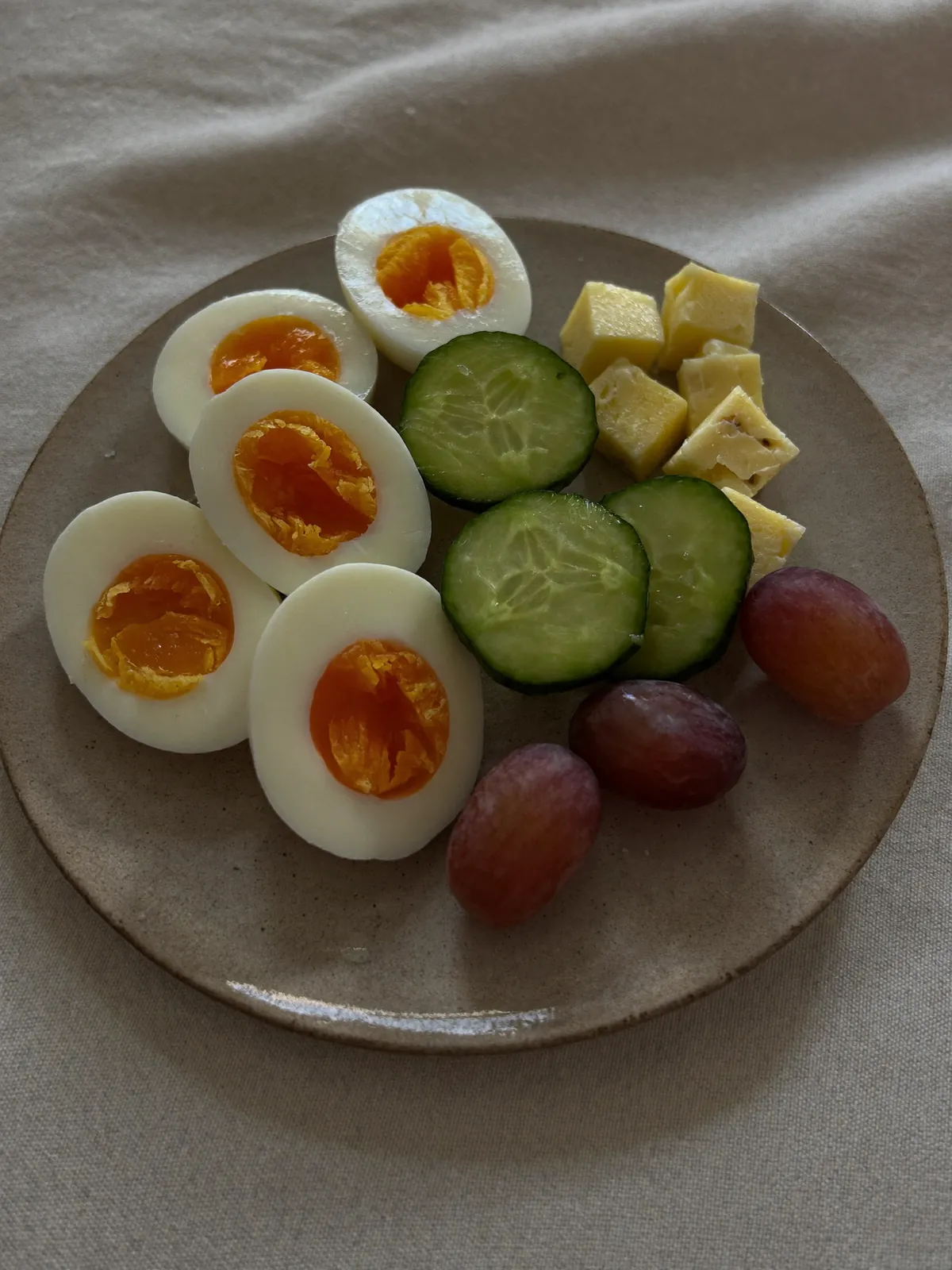
Good rough-day picks from the chart: cottage cheese, Greek yogurt, cold cooked chicken, eggs. Keep them plain. If something sounds bad, skip it and pick another.
New to this, or just had a change? Expect appetite to be strange. This section is about food only. Your prescriber sets everything about the medicine.
What helps on the plate: make the meals smaller, not fewer. Lean on the easy foods (yogurt, cottage cheese, eggs, plain chicken). Keep a few no-cook options in the fridge so a bad hour does not turn into a skipped day. If your appetite drops, protein still comes first, even if it is three bites.
Small meals, protein counted, all numbers from the chart. It is an example, not a prescription. Eat less if you are full. Skip an item if it sounds wrong.
Meal
Food
Protein
Breakfast
Plain nonfat Greek yogurt, 3/4 cup
18 g
Mid-morning
1 large egg
6 g
Lunch
Low-fat cottage cheese, 3/4 cup
21 g
Afternoon
Canned tuna in water, drained, 1/2 can
15 g
Dinner
Cooked chicken breast, 4 oz
35 g
Dinner side
Cooked brown rice, 1/2 cup
3 g
Evening
Part-skim ricotta, 1/2 cup
14 g
That adds up to 112 g. For context, the 2025 joint advisory behind our calculator mentions a flat 80 to 120 g a day as one way some clinicians set a target. Your prescriber or a registered dietitian can tell you which number fits you.
What to skip or go easy on
These are common community reports, not medical rules. Many people on these medications say the following feel worse:
Greasy or deep-fried food
Very large meals, even of good food
Fizzy drinks
Your stomach may disagree with the internet. Try a food in a small amount, see how it goes, and drop it if it does not sit well. If a food keeps making you sick, mention it to your prescriber.
Common questions
What should I eat first at a meal on a GLP-1?
Protein. Eat the chicken, fish, eggs, cottage cheese or yogurt before the sides. If you fill up early, the protein is already in.
How much food is one meal on a GLP-1?
Often a cup or less. Many people on these medications report feeling full after a few bites, so smaller, more frequent meals are easier to finish. The serving is a ceiling, not a target, and half a serving counts for half the protein.
What can I eat when I feel queasy on a GLP-1?
Cold, plain, low-smell food in small amounts, such as cottage cheese, yogurt or cold chicken. See the queasy-day recipes. Talk to your prescriber about nausea that doesn’t ease.
Should I drink water with meals on a GLP-1?
Liquid takes room that protein needs, so many people keep drinks between meals. Our 30-minute water rule explains the loose version.
How much protein do I need on a GLP-1?
A 2025 joint advisory from the American College of Lifestyle Medicine, the American Society for Nutrition, the Obesity Medicine Association and The Obesity Society names 1.2 to 1.6 grams per kilogram of body weight a day during active weight loss. Use the protein target calculator, then ask your prescriber or a dietitian what fits you.
This is food info, not medical advice. Talk to your prescriber about nausea that doesn’t ease.
Before you go
Severe abdominal pain that goes through to your back, vomiting you
cannot stop, or an inability to keep fluids down are not food problems.
Call your prescriber.
Everything on this page is food, habits, and lifestyle information. Your
prescriber sets your medication schedule, including dose and timing.
Free
The GLP-1 Starter Kit
The protein cheat sheet, seven queasy-day recipes, and the 30-day habit
tracker. Printable, and yours for an email address.
One email when something useful publishes. Unsubscribe in one click. No spam, ever.