What Not to Eat on Wegovy: The Short List, and How to Build Your Own
Wegovy avoid lists agree on greasy food and big meals. Use the two strike rule to build your own list without losing protein. Free Starter Kit tracker.
By Scott WilderPublished October 30, 2026
Independent researcher. Not a medical professional. This article is about food, not treatment. See
how these articles get written.
Skip greasy and fried food, rich dishes and big meals. Everything else on the long Wegovy avoid lists is a personal trigger, and you can find yours with a one line note per bad meal and a two strike rule.
By the end of this post you will know which foods to cut today, which to keep testing, and when stomach trouble is no longer a food question.
The Starter Kit has a free 30 day tracker that holds the note format below. It is complete on its own, and the link is at the end.
The short list: greasy food, big meals and rich dishes
Any meal bigger than you can finish without pushing.
Notice what is not on that list: protein. You still need it. Our protein floor of 60 to 80 g a day does not move because a website told you to avoid eggs.
Shrink the meal before you change the food
When nausea hits after eating, the label’s order of operations is the one to copy: meal size first, food second. If four bites is your limit, the target is grams of protein in those four bites, not the number of foods you are allowed to eat. Pick from the per-cup protein chart and stop at the first sign of full, not at the bottom of the plate.
Pushing through a full feeling to finish a plate is one of the most common ways to turn an ordinary meal into a bad one. If you want more on this, How to Eat on a GLP-1: Protein First, Small Portions covers the habits.
For drinks, sip between bites or between meals instead of drinking a big glass with food. The timing is in The 30-Minute Water Rule.
The rest of the list is personal, so test it
Between 40 and 70 percent of GLP-1 users get stomach and gut side effects, per pooled trial reporting. That is a wide range, and it is the reason two people on the same medication can have opposite lists. One person gets sulfur burps from eggs. Another gets loose stools from a protein shake. A generic list cannot know which one you are.
So stop asking what the internet says to avoid and ask one question about each food: what symptom did it bring back, and how many hours after eating?
Build your avoid list with the two strike tracker
One bad meal proves little. It can be portion size, a dose increase week or a stomach bug. A food earns a place on your list after two bad reactions to it.
Keep one line per bad meal:
Food
What happened (symptom, hours after)
Strike (1 or 2)
Swap I will try
Fried chicken
Nausea, 1 hour after
1
Baked chicken thigh, small portion, cold
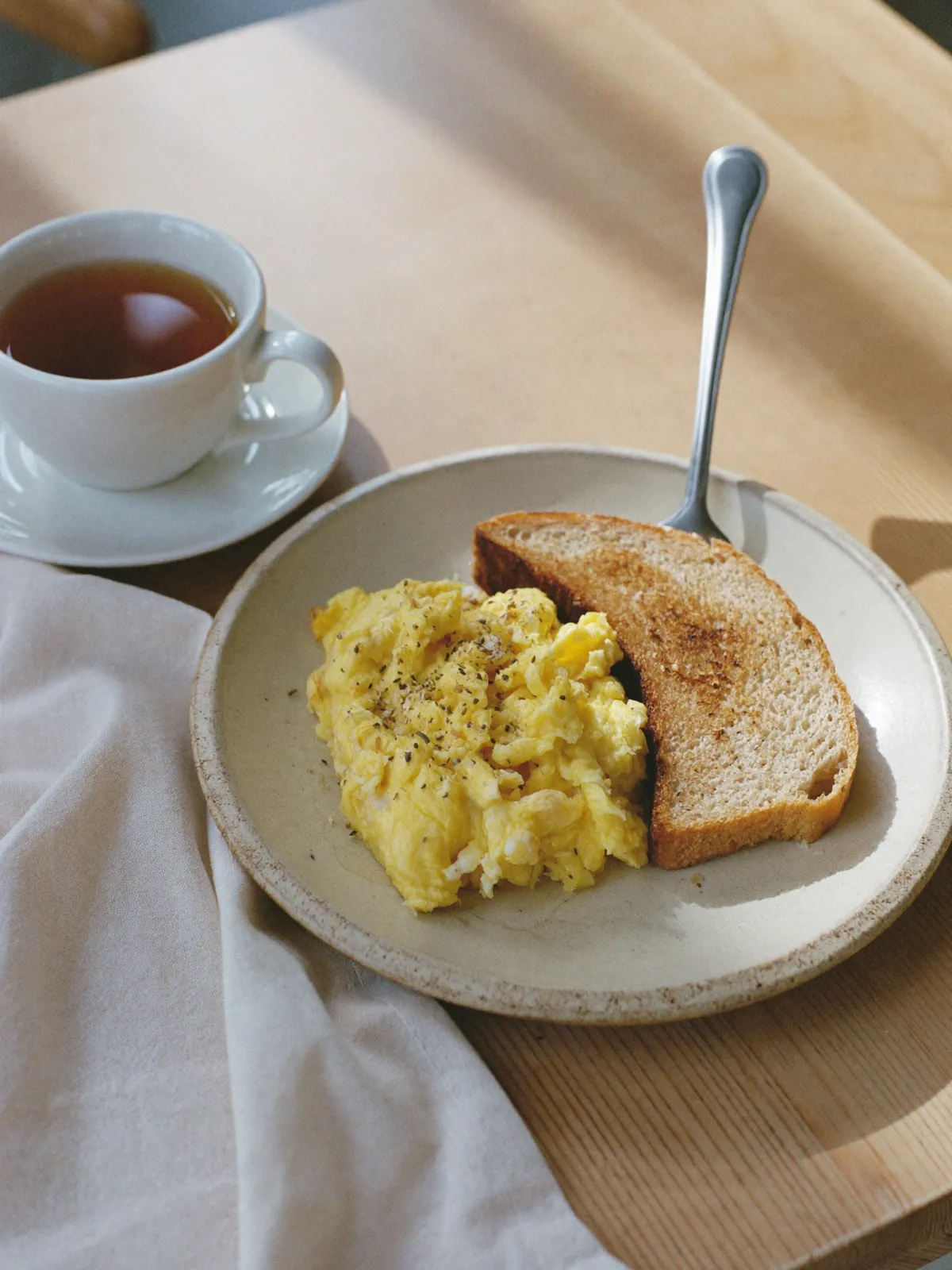
Scrambled eggs
Sulfur burps, 2 hours after
1
Cottage cheese, small bowl
Cream pasta
Loose stool, 3 hours after
2
Move to my avoid list
The rules for using it:
One strike: the food stays on the plate in a smaller portion. Write the line and move on.
Two strikes: the food goes on your personal avoid list.
Retest: try a dropped food again in two or three bites, at least a week after the last bad reaction, on a normal day and not in the week after a dose increase.
Change one food at a time. Wait for the next two meals before you judge it, or you will blame the wrong food.
An avoid list is only useful if every item on it is tied to a symptom you actually had.
Replace the protein before you cut the food
Every food you drop may take protein with it. Before it leaves your plate, check what the swap costs.
Example: say the fried chicken dinner gave you 25 g of protein, and the baked thigh swap gives you 20 g. The gap is 5 g, which you can make up with a spoonful of cottage cheese later in the day. Now say the swap gives 12 g. That is a 13 g hole.
The rule: if a swap drops the meal by more than about 10 g of protein, pick a different swap from the chart instead of accepting the loss. Do this for every row in your tracker. Copying a generic avoid list without replacing the grams is how people end up under their floor and wondering why they are tired.
Alcohol shows up on nearly every list. The reports are that it worsens nausea, reflux, diarrhea or dehydration for some people. Those are clinic and community reports, not trial results. Test it alone, on a quiet week, and log it like any other food. Check labels on alcohol-free drinks too: some are still high in sugar.
Sugary food and drinks are on the lists as foods to avoid or limit. Several sites go further and say sugar makes the medication work less well. None of the results we found name a trial for that, so it is a thin claim from commercial pages. Do not treat it as a rule. Treat sugar the way you treat everything else: if it brings back a symptom twice, it goes on your list.
When it is not a food problem, stop and call
Food fixes are for ordinary stomach upset. They do not replace a call to your prescriber. Use this box:
Stomach pain that will not go away, with or without nausea or vomiting, sometimes felt in the back: the product safety information says to stop the medicine and call your healthcare provider right away. Do not try a food swap for this.
Signs of dehydration (dizziness, headache, unusual tiredness): sip fluids, and call if it does not ease.
Pain or loose stools that do not settle after you change foods: call your prescriber or pharmacist.
The safety information also lists gallbladder problems, including gallstones, among the possible effects. If your pain is under the ribs after greasy meals, that is a reason to call and not a reason to tweak the menu. This site gives food guidance only. It is independent of Novo Nordisk and Eli Lilly, and it does not cover dosing.
Pick the last meal that made you feel bad. Write one line: the food, the symptom, how many hours later. Mark it strike 1. Choose a smaller portion or a swap for next time and check the protein gap against the 10 g rule.
That single line is your avoid list starting. In a week you will have a list that is yours, with a reason beside every item.
Keep the tracker where you will use it
The free Starter Kit has a printable protein cheat sheet, seven queasy-day recipes and a 30 day tracker for pill timing and protein, with no card required. You can add the strike column from this post to it in pen. Get the Free Starter Kit
Common questions
What foods should I avoid on Wegovy?
Start with greasy and fried food, rich or creamy dishes and meals bigger than you can finish. Other items on the long lists, such as alcohol, spicy food, fizzy drinks and heavy caffeine, vary by person, so test them one at a time.
Why does greasy food make me sick on Wegovy?
Fat is the slowest macronutrient to digest, and the medicine slows stomach emptying as well. Fatty food therefore stays in the stomach longest and is the usual trigger for nausea, diarrhea or vomiting.
Do sugary foods stop Wegovy from working?
Several commercial sites say so, but none of the results name a trial for it, so treat it as a thin claim. Sugary food and drinks are on the avoid or limit lists, so test them like any other food and drop them if they bring back a symptom twice.
Can I ever eat a food I dropped again?
Yes. Retest it in two or three bites, at least a week after the last bad reaction, on a normal week and not the week after a dose increase. If the symptom does not come back, take it off your list.
When is stomach pain on Wegovy serious?
Stomach pain that will not go away, with or without nausea or vomiting and sometimes felt in the back, is a reason to stop the medicine and call your healthcare provider right away, per the product safety information. Do not try food swaps for it.
Before you go
Severe abdominal pain that goes through to your back, vomiting you
cannot stop, or an inability to keep fluids down are not food problems.
Call your prescriber.
Everything on this page is food, habits, and lifestyle information. Your
prescriber sets your medication schedule, including dose and timing.
Free
The GLP-1 Starter Kit
The protein cheat sheet, seven queasy-day recipes, and the 30-day habit
tracker. Printable, and yours for an email address.
One email when something useful publishes. Unsubscribe in one click. No spam, ever.